Sunday, 26 August 2018

Concentrate on the process, not the outcome – Top competition preparation with elite rider Erin Orford

Concentrate on the process, not the outcome – Top competition preparation with elite rider Erin Orford


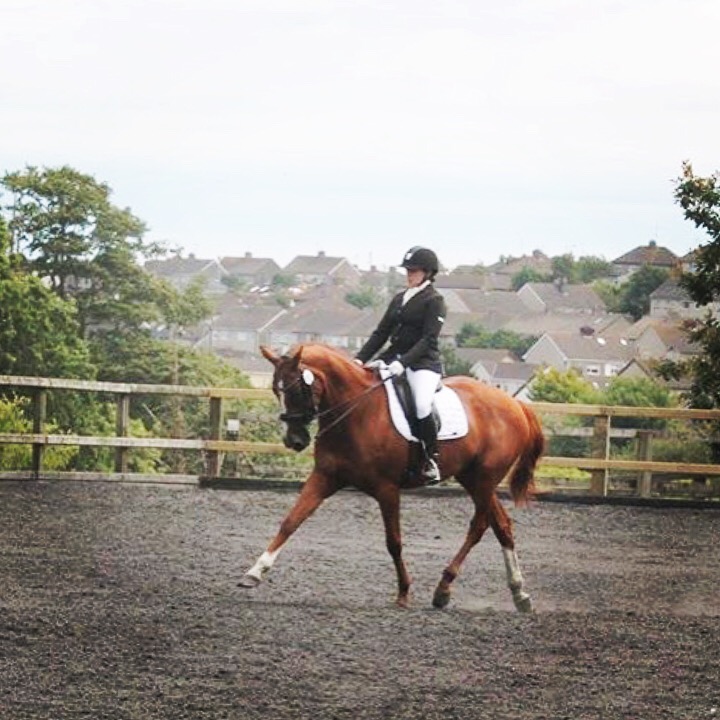
Dressage rider and Derriere Equestrian ambassador Erin Orford has been selected for the British para dressage team at the 2018 World Equestrian Games, with Annabel Whittet’s Dior – so ahead of this important event in the equestrian calendar, we asked Erin to share her pre-competition preparations with us…


Firstly a HUGE Congratulations to Erin, such well deserved selection. Erin Won the 2014 Derriere Equestrian Stars of the Future Sponsorship and we have been behind Erin every step of the way with this magical journey.  

As a top-level rider, mental preparation must be key – so how does Erin prepare for a big contest? “The bigger competitions are often the most important; so of course I put myself under more pressure for these, as I want to do well and show the horse off to the best of its ability,” Erin explains. “I often feel more nervous in the build up directly before getting on, when I have time to think about the event or occasion, and my mind has time to build it up and go over it in my head! I've been working a lot this year on concentrating on the process and not the outcome, however – so for example if you're trotting around thinking, ‘I need to get 75%’, the chances are you're not concentrating on your horse, or riding the movements; this makes the desired outcome less likely to be achieved,” Erin tells us.

Here are her five top tips for making maximising the chances of achieving a personal best at a competition of any riding discipline:


- Leave sufficient time: I like to make sure I leave myself plenty of time at a competition; I get ready early, put my earphones in and run through my test by the arena, so that I can familiarise myself with the layout, and the surroundings. Little things can throw you when you're under pressure, so you want to minimise the likelihood of this happening where possible.

- Control the controllables: You can't change the weather, who's on the judging panel in a dressage test, or who else is in your class; you can only do the best that you can do on the day, so focus on what you're doing.

- Have the right people around you where possible: whether that's something to give you a kick up the ‘derriere’ in the warm up, or to build your confidence just before you go in; learn what works best for you.

- Use targeted warm-up exercises: If you're nervous or get distracted, give yourself specific exercises to work on in the warm up; this way, you have less time to be overwhelmed by the big occasion.

- Invest in your Derriere! Derriere Equestrian underwear will provide you with discrete comfort, ensuring you are able to achieve a deeper, more effective, symmetrical seat. The Performance Padded Panty and the Bonded Padded Shorty Styles provide the best in selective, technical padded underwear.

We went on to ask Erin about equine anxiety or tension, and how she deals with this. “An anxious or tense horse can be like sitting on a ticking time bomb, which can make the rider anxious, and it becomes a cycle of nervous energy between the horse and rider,” she advises.

“Tension can show in many different ways; some horses ‘go in’ on themselves, while some are outward in their response, with spooking, running off, etc. You can often feel it in their back, in terms of their lack of attention or responsiveness to your aids, making you feel even more out of control. In this situation, you want to try to relax the horse with easy exercises that encourage them to bring their attention back to the rider. It is your job as a rider to give the horse confidence, use your voice to settle them, or to give them an aid when their bodies are too tense to listen to the rein or your leg. Large circles and easy transitions help to bring their attention from outside the arena back to you; you want to ride positively but in control, helping their balance and building their confidence as you go. Leg yield can also help to encourage them to use their body, as well as encouraging them to accept the leg; but make sure the exercise is easy for them, and then you can increase the difficulty when they are able to maintain the relaxation. Patting them gently on the neck can also help to encourage them to relax, as well as making sure that you're not holding them too much with the rein, so that they don't feel ‘trapped’.”

Many of us experience physical tension when riding; Erin says that common issues are becoming ‘fixed’ in one’s body and position, so the shoulders ‘hunch’. “You might for example grip with your hands and / or legs, and this will affect your ability to use your seat effectively. In the trot, you might struggle to do sitting trot, as it will feel as if you're being bounced out the saddle, “ she explains. “It might help to take your feet out of the stirrups for a stretch before putting them back in again; if you have a tendency to grip the reins, keep giving little pats to the horse, so that you can release the pressure, and mix up the sitting trot with rising, so that you can allow your back to warm up a bit more. Doing exercises in walk and canter can also help with your pelvis - and don't forget to breathe!” she concludes.

Erin rides at para grade three, as she is missing the radius bone in both arms, meaning she has shortened lower arms and only four fingers on each hand; the leading dressage rider also rides with prosthetic legs during competitions, as she’s a bi-lateral through-knee amputee. 

“As I have no lower legs, my seat is extra important - my Derriere undies are therefore invaluable!” she adds.

For a detailed Bio on Erin Orford, visit our sponsored riders page on the website.

http://www.derriereequestrian.com/sponsored_riders.html

Monday, 23 July 2018

Improve your jumping position With showjumper Bex Mason

Improve your jumping position
With showjumper Bex Mason


Do you need to hone your jumping position? As Derriere’s showjumping ambassador, I have some tips! It can be tricky to find that perfect leg position, and many of us have our stirrups a little too short - you will need to have quite short stirrups, especially as the fences rise in height, in order to give you the required shock absorption through the ankle joint. Your stirrups need to be short enough so that you can comfortably get your seat out of the saddle, allowing your horse to bascule through your legs. Your heels must stay down, and you need to have a bend in the knee, keeping your lower leg position ‘anchored’.

Practise your position

Because we use our jumping position for only a few seconds at a time, it can be difficult to master. Familiarise yourself by taking your jumping position when schooling on the flat, without jumps. A common mistake is to allow your lower leg to swing too far back, inadvertently encouraging your horse to speed up. Keeping the weight into your stirrups with your heels well down should prevent this happening. Over a fence, really focus on keeping the weight down into your heels, and do consider your upper body - if it is too far forward, e.g. if you lean forward too early, you may get catapulted forward, and your heels will rise. It is usually better from a safety perspective to be behind the movement that in front of it!

When training, I like to use bounce fences, where the horse will not put any strides between each jump, maintaining the jumping position throughout a grid. Start by setting out canter poles and if the distance is correct for you, it will be about the same for bounce jumps. One non-jumping stride is approx 7.5m, and two non-jumping strides approx 10.7m, but this is totally variable! Ask a friend to assist by moving the poles and adjusting them for you, and putting back any knocked poles, or work with your instructor. Try to keep the lower leg still, and think of the hips as acting like a ‘hinge’.

The show jumping position needs to be quite versatile - riders jumping higher showjumping fences are often seen in unusual positions when they ride against the clock, for example leaning to one side of the saddle, or pushing off from the ball of their foot to gain balance if the horse cat leaps. This means they need to have optimum foot stability, as the ankle acts like a spring for the rider’s limb, and must not collapse. Although all riders are different, the predominant style for event riders’ positions over XC fences currently seems to be more ‘chair’ shaped than when tackling arena fences, with the lower leg quite far forward, and the rider’s body weight further back with the heels well down as an ‘anchor’.

Either way, e.g. whatever your discipline, we can all improve our strength and stability through lunge lessons, which helps to mobilise and open the hips. Remember your comfy riding underwear too!


About Bex
Bex has worked for many years breaking in horses and competing at an international level with elite riders such as Tina and Graham Fletcher (GB), Ludo Philleaperts (BEL), Steve Cohan (NZ) and Viki Roycroft (AUS). Bex specialises in producing competition horses. “I find myself expressing love for my Derrieres daily,” Bex says of the underwear range. “I openly discuss the results and versatility of the products, whether it’s to customers at my yard, or fellow competitors at shows; I don’t even realise I’m doing it - these pants change riders’ lives!”


Friday, 20 July 2018

Positional points from Derriere Equestrian

Positional points

Derriere Equestrian offers some advice on how your torso affects your riding position.


For any rider working to achieve a consistent rhythm and outline with their flatwork, the torso is key. It can influence all aspects of your riding, in both positive and negative ways.

From a dressage point of view, judges are looking for a horse that goes forward with a good level of self carriage, rather than one with a false outline, whatever the level of competition. It is common to see people ‘hanging on’ to the rein contact, with a rigid hand. However, the hand simply connects the seat to the horse’s mouth, ideally in an elastic way. The seat and the elbow are the ‘anchors’ of the rider’s position – not the hand!


Self carriage

Equine self carriage is achieved through a soft, yet consistent rein contact, and targeted flatwork training to get the horse working forwards into the contact. The rider should aim to carry the hands and keep them level, without trying to interfere with the horse’s head carriage too much; it is also important to ensure the rider’s arms don’t straighten, which is an indicator of tense shoulders. Tense shoulders usually lead to a fixed hand, meaning the rein contact isn’t elastic!

‘Carrying the hands’ really starts at the shoulders – when you are schooling, try to think about establishing a good rhythm with sufficient self carriage, without ‘holding’ the horse – the hands can actually be quite light. For a good rein contact and a correct torso position, drop the elbow comfortably and relax it. This is the key to having a good rein contact; not a fixed hand!

A common fault for many riders is to collapse their hip – they usually drop their hip to the outside, which imbalances the horse. Remember, your body weight needs to be in the direction of movement. To correct or avoid a collapsed hip, sit up tall and make sure your back isn’t slumped. Relax your shoulders and check your arms – do they have a bend at the elbow? Carry the hands!

Remember also the importance of ‘personal comfort’ in the saddle - if you are working to improve your flatwork, good riding underwear is a boon. Consider padded underwear like the Derriere range; remember - when the rider is comfortable within the saddle, there is less likelihood of compensatory misalignment of the spine and pelvis, e.g. altering the body position to avoid pain to the sensitive crotch areas. And a comfy ‘personal area’ means a more effective partnership with the horse!


www.derriereequestrian.com


Wednesday, 13 June 2018

Equestrian Clothing ~ Colour magic!

Colour magic!


Equestrian clothing used to be seen as purely practical - outfits that you were not proud to be seen in on the school run, or when popping to the shops, post-ride! But now, thanks to creative designers and advanced technological materials and styling, today’s riding tops, breeches and other items of horse-riding apparel are smart, sassy, fit-for-purpose and form-flattering.

But what about the colours? Surely horsey clothes in lighter colours will get dirty - so dark colours rule? And don’t technologically-advanced materials like Polyamide and Elasthane shrink in the wash, or become ‘bobbly’ after frequent washing? Not necessarily - choose a high-tech item, whether riding top or breeches, that washes well at thirty degrees, and hang your garments to dry instead of tumble drying, and they will last and last, and retain their shape.


Top style tips - matching your breeches to your accessories


Yes, we all know that colour coordinating saddle cloths, head-collars, bandages, ear bonnets and protective boots for horses and ponies are definitely still popular! And if you want to do ‘matchy matchy’ with your breeches, then Derriere’s gorgeous navy Treviso Training Breeches will work well with all of the equestrian accessories brands. As a grown up, you may not want to colour-match exactly, however - tonal dressing and coordinating is even bigger news than ‘matchy matchy’ - so why not start with your breeches, and work backwards from dark blue? Tonal coordinating means using multiple shades of the same colour. It gives polished and ‘pulled together’ look, and you can be sure than all tones within a colour will go together. It’s also a more grown up way to rock the single-colour accessorising, starting from your smart, dark blue Treviso Training Breeches.


Style advice - choose pretty pastels


Every spring and summer, the fashionistas declare that pastel shades are de rigour. Here at Derriere Equestrian, this is something we have known about for a long while! Pastels go with most human skin tones and work beautifully with the staple of equestrian dressing, the colour navy. We love the concept of colour blocking with lighter, solid shades against a darker shade, making interesting and complementary colour combinations with our riding wear.

A good example is wearing our navy Treviso Training Breeches with a turquoise ‘Pocket Skin’ riding top - the Pocket Skin garments not only look good, but provide all round upper body support, comfort and climate control technology, with their moisture wicking, all-way stretch fabric. You will be in good company if you choose this pretty, green-blue colour - turquoise is officially making a comeback (if it ever went away!), with Valentino and Nina Ricci highlighting this beautiful hue in their fall-winter 2017 / 2018 runway fashion shows; and the famous Pantone Spring 2018 Fashion Trend Report giving a nod to the colour as one of 12 ‘call out shades’. You will find Derriere’s take on the colour turquoise a beautiful, soft, wearable shade.

If you want a different look, stand out from the crowd in our lovely white Cannes Competition breeches; they’re designed to promote optimal comfort and performance (and, like all our breeches, work in harmony with the Derriere undergarments, to eliminate chaffing). Pair with a coral-coloured ‘Pocket Skin’ for a pretty, summery look that ticks the fashion boxes! Again, the Pantone Spring 2018 Fashion Trend Report highlights coral as a key colour, describing their favourite as ‘blush coral pink’, with ‘subtly alluring’ qualities and ‘an understated appeal!’


We’d love to see your summer riding looks, so do share your pics with us on our Derriere Equestrian Facebook page, or drop us a message via the page!

www.derriereequestrian.com 

Sunday, 10 June 2018

The thigh’s the limit! The Dressage Rider's Thigh Position

The thigh’s the limit

The dressage rider’s thigh position is one of the first things we notice, when observing them ride; long, loose and relaxed, in a very good rider - or tense, forward and tight, in someone who is still learning their craft. A relaxed, long thigh, starting at the hip flexor, pulls the horse rider’s seat bones down into the saddle, creating a deep seat, and adding security in the saddle - it helps create an independent seat, which is imperative for influencing the horse. A good flatwork position sees the thigh lying flat against the saddle, with a slight inward rotation at the femur joint, e.g. at the top of the thigh-bone. The horse rider’s knees and toes can then point comfortably forward.

Conversely, in a less confident or experienced dressage rider, the thigh may be ‘gripping’, the upper leg may be positioned too far forward, and the rider may also have tight adductor muscles (situated at the inner thigh). This is actually extremely common in many riders, which is why many elite riders undertake activities like Pilates, Yoga and stretching, to improve flexibility, and combat tight muscles. This ‘gripping’ can push the rider off the saddle, rather than allowing the ideal, deep seat.

A relaxed thigh

Dressage rider and Derriere Equestrian ambassador, Avril Clinton-Forde, says that once you have achieved a long, relaxed thigh, there’s little that this area of the upper leg has to actually ‘do’. “Maybe it’s just my horse, but my thighs would rarely be consciously used,” she explains. “They need to stay relaxed, so that other aids can be effectively used. For my mare Duchess, my seat is really important, as she is so sensitive. 

In order to use my seat correctly, my thighs need to be relaxed, so my bum is deeper in the saddle... one reason why Derriere Equestrian underwear is as important to me as my hat, when I’m riding!”

So, what does Avril feel is the cause of a ‘grippy’ thigh when doing flatwork? “Gripping usually happens out of fear, and also being told to ‘sit still’. To do sitting trot for example, you need to move your pelvis with the horse, and flex your lower leg; you can’t do this unless your thighs are loose. If you grip, you prevent the pelvis from ‘rolling’, and you take away the power in your core; this ‘power’ helps the pelvis move. If you grip, your sitting becomes bouncier, you then grip more to stay on, and you make it worse! Also, by gripping, your lower leg will start to rise, the horse will go faster, and voila, you have a less than elegant dismount at speed!” she adds.


Avril maintains that a relaxed thigh matters increasingly to us as horse riders as we move up the dressage ranks, in terms of allowing our lower back and pelvis to mobilise. “Contact with the horse’s back is so important, as naturally they respond to the pressures and weight changes from our seat. These tiny seat adjustments will help the horse move sideways, bend, speed up and slow down. For example, drawing yourself upwards from your pubic area (yes ladies, your ‘foofoo’!), and up into your core, to make yourself lift upwards, allows room for the rider’s back to mobilise. This will give freedom in the horse’s collected work,” she explains.

Finally, Avril adds that the rider’s hip flexors need to be free to use the leg aids. “Your legs guide the horse sideways, and if your thighs are tight, you affect the use of your hip flexors; these keep your pelvis loose while you put your leg aids in place,” she concludes.

If you want the perfect training breeches to compliment your dressage position, look no further than Derriere Equestrian’s streamlined Treviso Training Breeches. 

And don’t forget your padded riding underwear! “The Derriere Equestrian Performance Padded Panty has padding that cushions your bum and ‘lady garden’, making riding with your seat feel like silk knickers and summer breezes,” Avril says.

Avril Clinton-Forde contests dressage with her Irish Sport Horse mare, Grand Duchess - see her blog at http://duchessdiaries.ie/

www.derriereequestrian.com


Saturday, 9 June 2018

Core beliefs By French dressage rider and Derriere Equestrian ambassador, Antoine Nowakowski

Core beliefs

By French dressage rider and Derriere Equestrian ambassador, Antoine Nowakowski

Without realising it, we all use our inner core muscles extensively, every time we ride our horses! These muscles are vital in establishing correct posture and position in the saddle, and are necessary for maintaining balance, especially if the horse were to trip or spook; therefore it is sensible to maintain fitness and flexibility in this area.

For example, when schooling, it is especially important to establish a correct, upright position in the saddle during downward transitions. It is very easy to slump forwards, drop the shoulders and look down, resulting in the horse tipping on his forehand, hollowing in the contact and often rushing and/or losing balance. If you feel your transitions are letting you down, revert to sitting trot, as this is almost impossible to perform well if your position in inadequate! To begin with, do it in bite size chunks, for instance between letters, or for half a twenty metre circle, so it is performed little and often; but what you do, you are doing very well. Once you feel confident and established, try to lengthen your time in sitting trot until it becomes second nature. This will improve your seat, balance, position and core muscles steadily over time; it will also make upward and downward transitions much easier to sit to, resulting in maintaining a soft outline and good rhythm.

Improving lower back strength
An excellent technique to improve lower back strength, inner core muscles and seat is to ride without stirrups. This will give you a deeper feel for the movement of the horse, and you will become more 'as one' with him. Again, little and often is the key; build up gradually to longer periods, and aim for the most advanced manoeuvres of upward and downward transitions without stirrups. If you can achieve this without loss of balance or bouncing, you can be sure that your inner core muscles are what you would wish them to be!

Exercising at home
You can help yourself further by dedicating even twenty minutes a day to simple home exercises such as doing planks, squats and sit-ups (obviously if your health, fitness and mobility allows), and you could join pilates or yoga classes. All fitness activities, e.g. running, swimming etc, although not solely useful for core muscles, will all help to achieve the level of fitness desired, as well as a more toned body. Horses are huge animals, and it takes many things to get the best from them and if you can achieve near-perfect control of your own body, that will go a long way towards managing the equine body beneath you.

As your fitness and core muscles improve, you will find your job in the saddle will become easier with less strain required; the whole picture will improve and the added bonus will be that your horse will be growing muscle and becoming a fitter more all round athlete, and better able to answer the demands needed of him.

Remember that when the rider is comfortable within the saddle, they can move more easily with the horse’s gait. Comfortable underwear and breeches are a must and the Derriere Equestrian range is designed for both men and women; it’s hard to find great riding underwear for men, but the DEPerformance Padded Shorty and the Performance Seamless Shorty both excel at their job, offering exceptional comfort and performance, in my experience!


www.derriereequestrian.com 


Wednesday, 11 April 2018

Man up! Positional pointers for male riders from Andrew Stennett BEF Elite Coach & Derriere Equestrian Rider


Man up!

We asked British Equestrian Federation Elite recreational coach and consultant, Andrew Stennett, BHSM Cert Ed FE UKCC Level 4, to share some positional pointers for male riders

All riders must learn how to acquire the correct riding seat and position; for men, but this expertise may need to be a little more specific and less generalised than perhaps it is for ladies! The male horse rider will quickly learn to adjust his position and body weight in order to protect his more tender areas. Some side effects of incorrect, ‘protective’ posture could be a hunched back, causing the elbows to stick out and an incorrect line of rein contact; the rider’s head tipped down and sideways; legs too far forward, and heels raised, rather than ‘deep’.

What does a good riding position entail?

Let us start from a good seat position, whereby you are sitting deep into your saddle on your seat bones. Automatically, you will have an improved contact and feel with the horse, allowing you to sit up straighter, pushing your heels down and encouraging depth and length of leg with weight into the stirrups. The correct picture is already beginning to form, and from there we can move on to considering the imaginary line from bit, to hand, to elbow. Next, we must ensure straight shoulders, and the head sitting straight and looking forwards.

It is important to maintain fitness and work on inner core strength. Ideally you need to be fit for the activity you are doing, and as you become more proficient, there will be less aches and pains as your body acclimatises to the routines you are performing. Trials and tribulations are to be expected but will be a very rewarding and satisfying challenge to work through! There are on-horse exercises to help you improve, such as sitting trot, riding without stirrups and lunge lessons.

Strengthening your back is an important process for any horse rider, and simple work at home can help, such as pilates, ‘planking’ (search online for ‘planking for horse riders’, for tips), some gymnasium equipment and correct weight lifting. Conversely, do be very cautious of causing back problems with the wrong kind of work, or exercise. Even cutting out bad habits in your daily routines would be a good starting point, e.g. carrying heavy weights correctly and sitting in an office chair with god posture.

A common mistake for male riders is often starting out with incorrect clothing; it is not only uncomfortable but could also be dangerous. Riding in jeans for example is likely to cause chafing of the legs. Men, in particular, need to be aware of these problems and also consider some of the wonderful riding underwear provided by DerriereEquestrian, as well as the fabulous competition and training breeches!

Ironically, once they become established riders, men generally end up with a deeper seat than women, which may give them more ‘stickability’ in the saddle, and perhaps goes some way in explaining why there are so many more male riders at the top of all the equestrian disciplines.

Andrew Stennett is a registered instructor, NVQ/UKCC Assessor & Verifier. He is a Qualified Teacher of further Education specialising in Equestrian Learning and Development, and is a British Equestrian Federation Elite Recreational Coach. 


Andrew is a fan of Derriere Equestrian products, telling us they make a big difference to his riding. “Derrieres enabled me to get back riding in comfort after a break, and they are helping me compete at the same level as in my youth,” he says.


When a rider is comfortable in the saddle, even at a subconscious level, they will ride with a deeper, more effective seat. Carl Hester MBE Brand Ambassador for Derriere Equestrian products believe in the underwear to such a level, he is famously quoted in saying
 “Every Rider Should Be Wearing Them”


The more comfortable and higher performing the padding is, the greater energy savings and better posture for the horse rider. On the contrary, discomfort can cause the rider to move in the saddle while trying to readjust their posture, interrupting the harmony between the horse and rider.

The Derriere Equestrian Range was developed by Claire Galer Equine and Human Physiotherapist. After years of working closely with horses and riders from grass routes through to Olympic level competitors, it became clear to Claire the need for such garments to fill a gap in the market for riders for technically designed performance underwear for equestrian sport. When conducting symmetry assessment with riders and working through product testing, the results and effects on rider position, comfort and resultant performance were quite phenomenal. 

When a rider is seated in total comfort and with products that are not visible to others through their breeches, yet offer luxurious padded support, a rider will ride more effectively and with a closer union with their horse. 

No need to worry about uncomfortable seamlines, underwear moving where it shouldn’t, Derrieres support riders to perform at their best.