When schooling, try to establish a soft medium walk; forward but not too fast or rushed! The horse should not lean on you, but should be working into the reins and accepting of the contact - this is your communication line. ‘Sponging’ the reins with your fingers can be used to encourage them to soften rather than pulling or using the reins for your own balance. The horse should keep the momentum going without you having to nag with the leg but you should also be able to use it to influence their body without them blocking against it or rushing forward so they stay between the leg and the rein. (If you use your schooling whip as an adapted leg aid, be sure to use it to back up the softening rein aid, to encourage forward movement.)
 Handy halts

Once you have established a nice walk, as an exercise, ask for a good, square halt. Use your body as a half-halt to shorten the steps, whilst still riding forwards into the halt. One of the most common errors I see is riders stopping from the rein and taking the leg pressure completely off, which would encourage the horse to fall into the halt, and to lean on you. Ride forwards into any transition to keep the horse stepping under and pushing forwards and upwards into the transition, rather than doing it front to back from the rein, resulting in the hind legs being left behind.
The preparation for the halt is the most important part of getting a good halt, so check the horse’s balance and straightness (e.g. are they falling one way or another?), as if they’re crooked and falling one way going into it, this will be how they halt. You should be able to prepare for the halt without the horse anticipating it, so in training, only ask them to actually halt when you have them in the right place during the steps before it. They should step forwards into the halt, and stand in a nice balance, ready to push forwards out of the halt. If they leave a leg behind, always correct them by stepping forwards, rather than backwards.

Walk-trot transitions
For a nice upward walk-trot transition, the horse must be walking for himself, so that you can give a light aid to ask them to move up into trot. If you’re having to nag them in the walk, you’re going to have to make even more effort to move up into trot, so think about how much effort you’re having to put in, compared to your horse! Give a light aid and then if they don’t respond, back it up with a quicker leg aid, making sure to reward them when you get the response you want. As in the walk, the horse should trot for themselves without you needing to constantly remind them, so if you have a lazy horse that relies on the leg, your goal is to be able to use less leg, and for them to keep trotting. If you have a hot or sharp horse that runs away from the leg, your goal is to be able to keep your leg on their side a bit more (almost hugging), without them running away from it. You can use your body weight by moving your shoulders slightly forwards (marginally!), to ask for them to move forwards, and by sitting up a bit more, to ask them to wait.
Trouble shooting
To check if your horse is truly on the aids, you can set yourself markers to trot or walk at, and then you can see how long it takes your horse to respond, as in a dressage test, you need to have the control to be able to perform a movement or transition right on the marker. You can do transitions both on and off the track to check you have control of their body before during and after the transition, and notice any changes during this. It’s also worth checking your own rider balance and position; it’s easiest for the horse to carry us when we’re in balance, and they want to be directly under our weight. So, if we’re moving all over the place, it makes it more difficult for them to be straight! Once you are able to do these transitions effectively, you can also add in transitions within the pace by riding forwards and then collecting the trot a little, and then forwards again. This will also help to develop the expression within the trot, and allow you to play with the gears; but make sure to start with small changes within the gears before building this up, so that the horse stays soft and supple over the back!
.png)
Downward transitions
To gain a pleasing downward trot-walk transition, you should go into sitting trot, maintain your forward energy and use your body to ask the horse to start to sit and shorten the trot steps to help their balance, going into the walk. If you need to, you can use the outside rein to give a half halt, but make sure to give it straight after, so that you don’t rely on it to slow down, and you’re not pulling the horse into walk. If they are bracing going into the transition, try to play with slowing the trot down within your trot work, whilst keeping the softness, so that you can keep them in a good balance, and soft during the preparation of the transition. This will allow you to ride forwards into the transition, rather than using the rein to pull them backwards into it. Over time and repetition, this will improve and your horse will get stronger within this, so that he can maintain a good balance and outline throughout.
What to wear
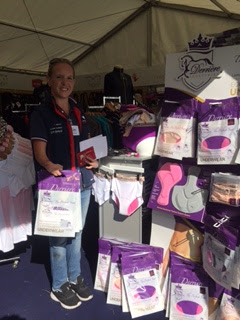
When you’re training, the Derriere Equestrian Treviso Training breeches are great breeches to consider. They’re designed to promote optimal comfort and performance, and work in harmony with the Derriere undergarments, ensuring all fabric surfaces come together in a symbiosis that completely eliminates chaffing, abrasions and discomfort! The material content is a comfy mix of cotton, microfibre and elastane.
All about Erin Orford
Derriere Equestrian sponsored rider Erin Orford is one of Britain’s most determined and inspirational dressage riders. A qualified UKCC Level 2 Dressage coach, Erin has her sights set on the Paris 2024 Paralympics and beyond. Visit - www.erinorforddressage.com
.jpg)


